




Sore Nipples as a Result of Breastfeeding – Consider these Helpful Tips!
Breastfeeding is one of the joys of being a mother. For many women, however, this wonderful experience is often accompanied by pain.
As a matter of fact, 96% of mothers suffer from pain while breastfeeding and 33% of them struggle with sore nipples.
They experience symptoms, which can make breastfeeding difficult.
It may be reassuring to know that you're not alone in this. These problems are perfectly normal, especially when you start breastfeeding. Sore nipples or nipple inflammation are nothing to worry about.

90% of the mothers want to breastfeed their child 1
- 96% experience pain while breastfeeding 2
- 33% suffer from sore nipples 3
1 Source: KiGGS Welle 2 – Robert Koch Institute – Germany
2 Source: German Federal Institute for Risk Assessment (BfR) – (2007) Sore Nipples during
Breastfeeding – Causes, Prevention and Therapy
3 Sources: STELLA – Study on Dietary Behavior during Infancy – Bayerisches Landesamt für
Gesundheit und Lebensmittelsicherheit
We’ve put together some important tips on how to prevent or treat sore nipples, so that breastfeeding can again become a wonderful experience for both you and your baby.
From finding the right breastfeeding position, to using breastfeeding aids such as nipple shields, to helpful care tips: There are so many different options for mothers to enjoy a pain-free and harmonious time with their baby. Therefore, it is possible to find an individually tailored solution for every mother.
What can cause sore nipples?
Since breast milk is a baby’s best source of nutrition, breastfeeding is a priority for most mothers early on. Supportive professionals, such as midwives or lactation consultants, often provide help to find the right latching technique or the best breastfeeding position.
So what exactly are the causes of sore nipples or nipple inflammation after breastfeeding a baby?
Sore mammillae can be caused by a variety of factors. Let's take a closer look at them.
The Breastfeeding Position
A common trigger for painful nipples while breastfeeding is an inappropriate breastfeeding position.
If the baby does not lie in the correct position, they may not latch onto the entire nipple, and the overall distance to the breast may not be optimal. This can cause increased pressure because the baby's suction cannot be distributed evenly.
Therefore, finding the right latching technique is crucial to prevent sore mammillae caused by the wrong breastfeeding position.
The nipple should target the baby's upper palate to allow for proper latching and effective sucking.
A breastfeeding consultant can practice the technique with you so that you will soon adapt to your baby's sucking style.
Moreover, the skin contact between you and your baby can stimulate the production of oxytocin and subsequently milk.
Your Baby is Teething
It is important to be especially attentive during this phase and to gently respond to your baby’s needs without risking an infection or delayed wound healing. When your baby is teething, it may tend to bite or suck more than usual, which puts extra strain on your breasts.
It can be helpful to soothe the baby with a teething ring or other tooth-friendly toys before breastfeeding to satisfy their urge to chew.
Other Causes for Sore Nipples or Nipple Inflammation
Other Causes for Sore Nipples or Nipple Inflammation
Alongside the breastfeeding position and a teething baby, there are also other causes that can cause pain in the nipples during breastfeeding. Infections and inflammations can develop rather quickly, especially if the mother is inexperienced or does not practice proper breast care. Another problem may be that the baby does not latch onto the nipple properly while sucking. Let's take a closer look at some of the reasons:
It is important to be especially attentive during this phase and to gently respond to your baby’s needs without risking an infection or delayed wound healing. When your baby is teething, it may tend to bite or suck more than usual, which puts extra strain on your breasts.
It can be helpful to soothe the baby with a teething ring or other tooth-friendly toys before breastfeeding to satisfy their urge to chew.
- Nipple infections can cause pain and inflammation. It is important to take signs of a possible infection seriously. These may include redness, swelling, or unusual secretions. If necessary, seek medical help. Be sure to talk to your breastfeeding consultant.
- If your breasts become overly filled with milk, this can also cause pain and make breastfeeding less pleasant for both you and your child. Painful swelling and tenderness may occur more easily, or the shape of the nipple may change in a way that makes breastfeeding difficult.
- If you use products on your breasts that provide too much moisture or cause dryness, the skin and the sensitive nipples can become irritated more quickly. Particularly when your breasts are under a lot of strain, you should treat your body gently.
- Some mothers can have more sensitive skin than others. If this is the case, the healing of sore or inflamed mammillae should be additionally supported by using soothing creams and other short-term remedies. Hormone fluctuations can also bring about changes to the skin, but this is a completely natural process.
- Flat or inverted nipples make it more difficult for the baby to latch on. This can lead to more stress and may prevent sore nipples from healing.
- Another factor is your baby's oral cavity. Special features such as a shortened labial or tongue frenulum or a cleft lip and palate can make it difficult for the baby to latch on and cause pain.
Sore Nipples – How to Help Yourself
If you experience sore nipples while breastfeeding, there are a variety of methods and aids that can be taken as a precaution and provide relief. These include treatment with a soft laser, the use of nipple shields, or another appointment with your breastfeeding consultant to seek advice on the right breastfeeding position.
However, it is at least equally important that you as a mother do not panic. Remember that many other nursing mothers experience these symptoms too. If you bear in mind some useful recommendations, your sore or inflamed nipples will not become a permanent problem.
Above all, you should focus on the very special time you can spend with your baby. Here are a few tips to help with sore mammillae.

As a Mother, Take Good Care of Yourself!
Start with yourself. This is a most valuable advice when it comes to sore nipples because your personal well-being is just as important as the baby’s.
First and foremost, you should check and adjust your breastfeeding position. Your baby shouldn’t have to turn their head while breastfeeding and they should be positioned roughly at the level of your breast. You should also feel comfortable in order to alleviate the pressure on your nipples and ensure a more pleasant breastfeeding.
If you have flat or inverted nipples, nipple formers or nipple shields can be helpful. After breastfeeding, you should take good care of your sore nipples. You can do so by applying ointments or a few drops of your own breast milk.
Should I Use a Breast Pump to Give my Sore Nipples a Rest?
For sore nipples, expressing breast milk may be helpful. It spares the nipples while the baby is still supplied with healthy breast milk. It is important to use a breast pump that provides adequate but gentle suction to avoid additional irritation of the nipples. The right breast pump allows the mother to keep on breastfeeding without affecting the healing process of the nipples.
Hygiene plays an important role when using a breast pump on sore nipples. Make sure that all parts of the pump that come into contact with breast milk are cleaned regularly and thoroughly. This prevents infectious microorganisms from spreading and ensures the health of your nipples and your baby’s. A breast pump can either be used as a temporary or permanent replacement for breastfeeding or as a supplement, depending on what works best for you and your baby.
Proper Hygiene to Prevent Sore Nipples
Care and hygiene of the breast plays an essential role in the prevention of sore nipples caused by breastfeeding. Good hygiene practices can help prevent infections and keep the skin of the nipple region healthy.
Start by cleaning your breasts regularly with warm water. Use mild and skin-friendly products that do not irritate the breast’s sensitive skin. Avoid harsh soaps or shower gels as they can destroy the skin's protective barrier and make the nipples more susceptible to fissures.
If your nipples hurt while breastfeeding, leave a few drops of breast milk on the nipples afterwards and let them air dry. Breast milk possesses antibacterial properties and can support the healing of small fissures or wounds.
Make sure to keep your nipples dry. Wet skin can be a breeding ground for bacteria and increase the risk of infection. Use clean and dry nursing pads to keep the breast dry and change the pads regularly.
Aids for Sore and Cracked Nipples
Nursing shields, soft lasers, and more: These and other remedies help against sore and cracked nipples caused by breastfeeding. For many mothers, treatment at home is key as it allows them to relax in a comfortable environment. One innovative and effective tool for this purpose is the Soft Laser for Sore Nipples, also known as low-level laser therapy (LLLT).
While laser therapy provided by midwives has been available for some time, it is now also possible to treat yourself comfortably in the privacy of your home. Not only does this save time, it can also help you avoid the stresses that result from visits to the midwife, such as the preparation of the baby and other factors.
Low-level laser therapy uses low intensity light to promote healing of the breast and relieve pain. This form of therapy is non-invasive and painless and is now favored by many mothers with sore nipples that do not heal. The soft laser emits a specific wavelength of light, which penetrates deep into the tissue and stimulates cell energy production. This process is called photobiomodulation. It promotes cell regeneration and improves blood circulation in the affected areas.
In addition to soft lasers, there are other aids that can help heal sore nipples caused by breastfeeding. Products such as lanolin cream and special nursing pads or nursing shields can also help to protect the nipples and speed up the healing process.
Clinical Effects of Soft Laser Therapy
- Accelerated wound healing
- Anti-inflammatory effect
- Pain relief
- Stimulation of blood flow
- Decongestant effect
- Reduced risk of infection
Clinical Effects of Soft Laser Therapy
- Accelerated wound healing
- Anti-inflammatory effect
- Pain relief
- Stimulation of blood flow
- Decongestant effect
- Reduced risk of infection
How long does it take for sore nipples to heal?
How quickly sore nipples heal varies depending on the cause and therapy. If you have found the right remedy, sore nipples will take no more than a week to heal. Mothers are advised to consistently follow the recommended care practices and treatment methods and to seek medical help when necessary to promote a quick and effective recovery.
After all, treating sore nipples can be a problem if you ignore your body’s signals. Easy-to-use tools, such as the Rent, provide quick relief for many mothers. The duration of the healing process generally depends on various factors such as the severity of the wounds, the mother’s overall health, and the consistency which she applies to her treatment methods.
In milder cases of sore nipples that can be treated by slightly adjusting the breastfeeding technique or applying soothing ointments, clinical improvement can be achieved quickly within a few days.
In more severe cases, healing may take longer, especially if infections occur or the wounds are very deep. In such cases, it is particularly important to seek medical advice and possibly consider a more targeted treatment, such as taking antibiotics or a short-term soft laser therapy.
Do sore nipples caused by breastfeeding heal by themselves?
In some cases, sore nipples caused by breastfeeding may heal on their own, especially if the reason is a mild irritation or a wrong breastfeeding technique in the early stages of the nursing period . Oftentimes, the situation improves as soon as mother and baby have developed an effective and comfortable breastfeeding routine and the nipples get used to regular nursing. However, sore nipple pain that is persistent and does not disappear after the first days of breastfeeding requires special attention.
Quick Relief for Sore Nipples
Finding the right breastfeeding position and making sure that the baby latches properly is essential in order to ease nipple soreness. The use of soothing ointments and the healing properties of breast milk can also provide relief. Soft laser therapy is an effective and gentle treatment method for mothers who struggle with persistent pain or open wounds.
Low-level laser therapy (LLLT) speeds up the healing process and alleviates pain effectively by boosting cell renewal and blood circulation in the affected areas. However, what will be even more important to you as a mother is that home therapy allows you to save time and reduce stress during this very special time in your life that you share with your child. Have the soft laser delivered promptly so it can be employed in a timely fashion. Once your symptoms have subsided, opt for a combination of treatment options that works best for you to help your body heal sore nipples caused by breastfeeding. This will soon allow you to continue sharing these special moments with your baby.
Keep in mind: The well-being of the mother is crucial for effective breastfeeding. It is therefore important to pay attention to your own needs and seek support if necessary. With the right combination of preventive measures, natural remedies, and advanced treatment methods, it is possible to cure sore mammillae effectively and turn breastfeeding into a pleasant experience for mother and child.
Observational Study for the Treatment of Sore Nipples with the Soft Laser Employed in Several Hospitals:
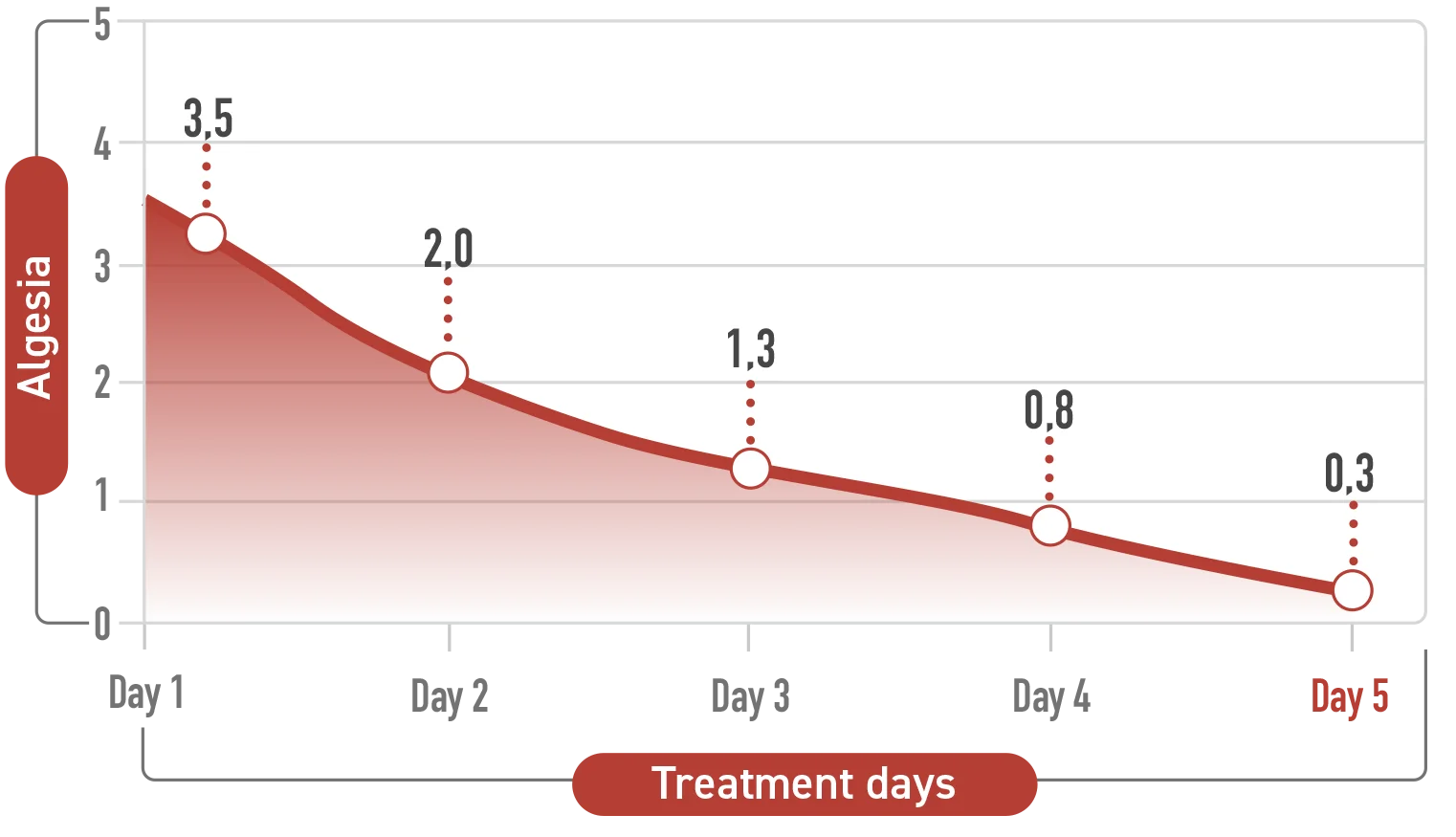
As early as on the second day of treatment, a significant reduction in pain was observed. Furthermore, consistent laser treatment administered BEFORE breastfeeding led to better results in the course of pain, and a spontaneous analgesic effect could be achieved.*
* Evaluation of therapeutic success conducted by 3 hospitals & 50 study participants
B. Bednar, E. Unterberger: Lasertherapie bei wunden Mamillen (eng. Laser Therapy for Sore Mamillae), 10/2001